
Who needs a Gas Warning Notice?
Any customer with an appliance or installation you've found Immediately Dangerous (ID) or At Risk (AR) under the Gas Industry Unsafe Situations Procedure.
When you find an unsafe situation, issue the warning notice there and then: the classification, what's wrong, what you did, and a signature as receipt.
Start 30-day free trial See a sample PDF
30 days free, no card. Nothing to cancel.
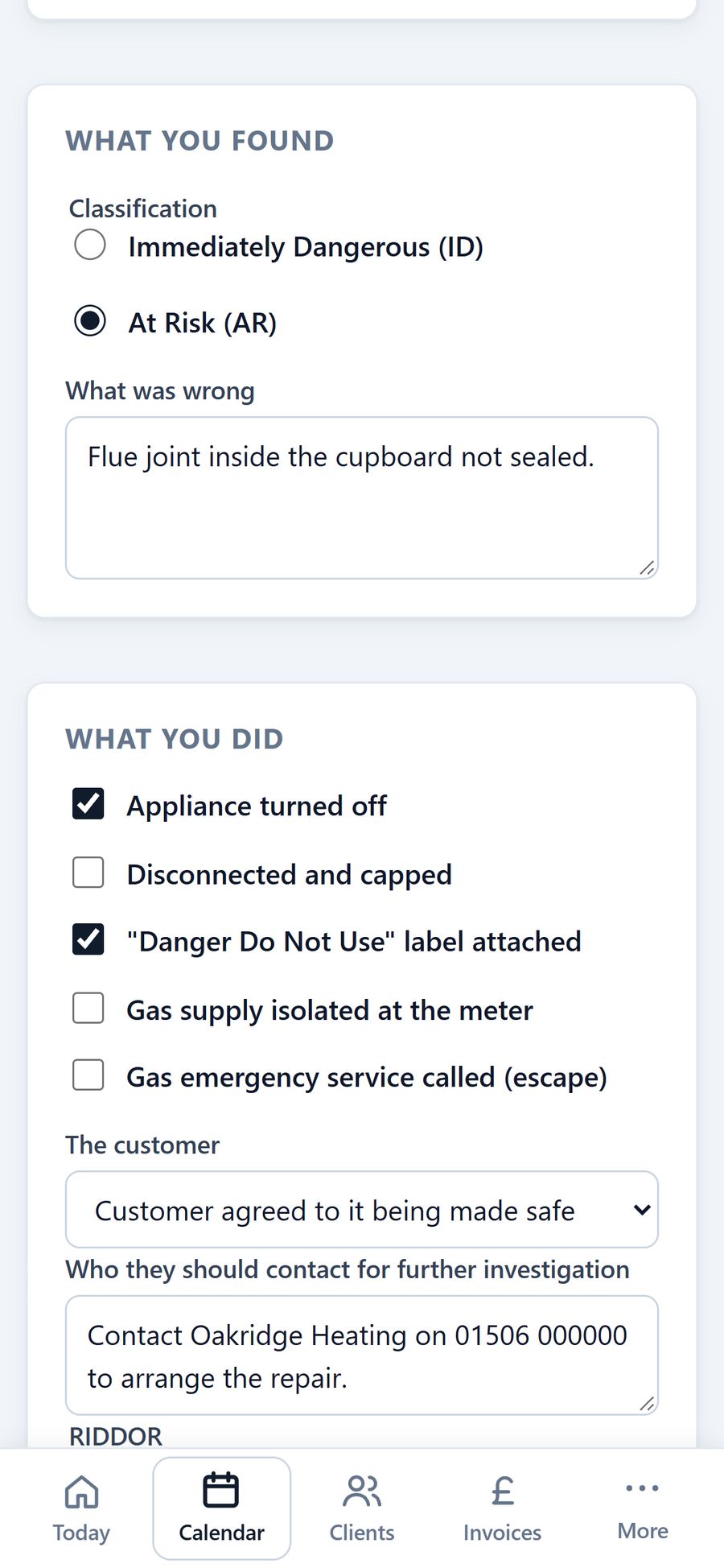
Any customer with an appliance or installation you've found Immediately Dangerous (ID) or At Risk (AR) under the Gas Industry Unsafe Situations Procedure.
Read more: ID, AR and NCS explained
Open a sample PDF — it uses a made-up company and customer.
Immediately Dangerous means the installation is a danger to life or property now and must be disconnected. At Risk means one or more faults could become dangerous, and it should be turned off with the customer's permission. Both need a warning notice.
Record why there's no signature — refused to sign, or nobody present — and the notice is still issued and emailed. The PDF shows the reason, so there's a record that the customer was told.
No. Issuing a warning notice is a duty whenever you find an unsafe situation, so it's always there, even if you've switched certificates off for a company that does other work.